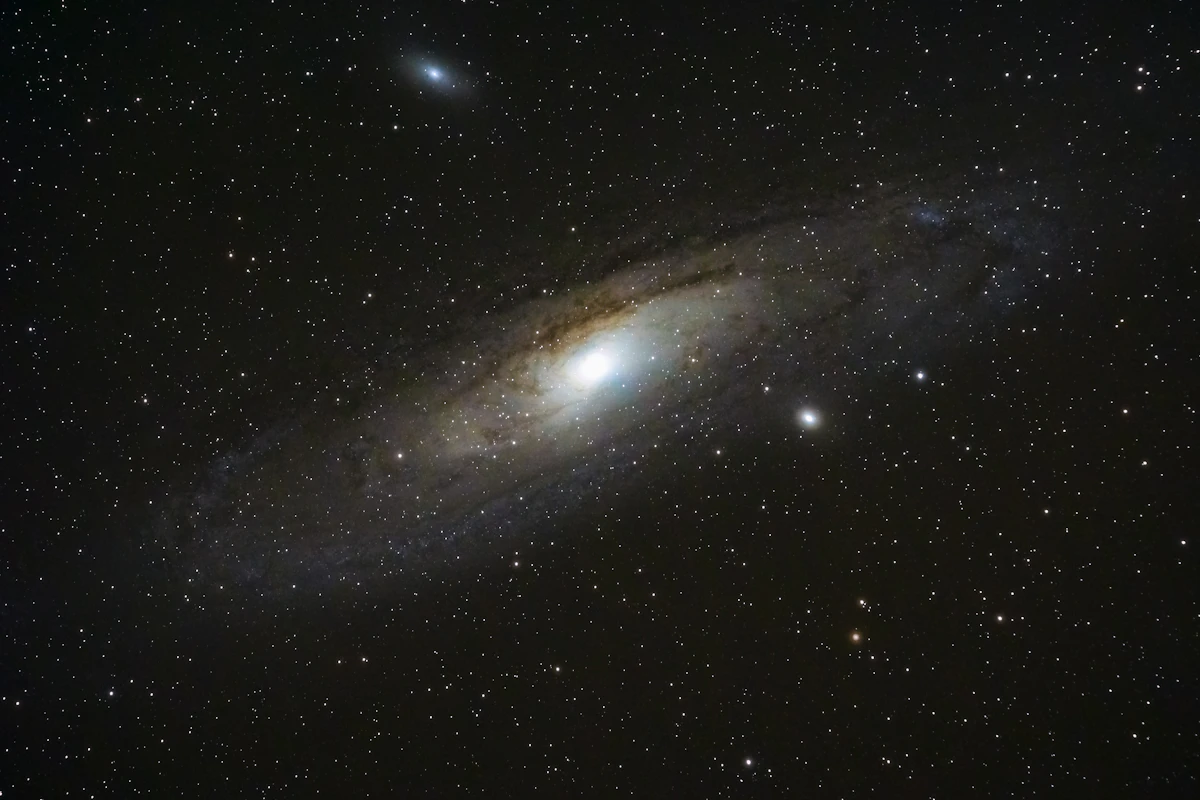
Space has a funny way of making our daily stresses feel completely microscopic. One minute you are worrying about missing a train, and the next minute, astronomers are finding a star screaming around a cosmic monster at thousands of miles every single second. It is wild, humbling, and frankly, a little terrifying.
Recent observations of our galaxy's beating heart have turned up something extraordinary. Scientists spotted a star that breaks all the usual rules, setting a brand-new speed record for objects orbiting the supermassive black hole hiding right in the middle of the Milky Way. If you thought regular space objects moved fast, this little stellar rebel is in a league of its own.
Meet S4716: The Ultimate Cosmic Speed Demon
Deep in the dense neighborhood surrounding Sagittarius A*—our galaxy's resident supermassive black hole—sits a newly identified star designated as S4716. While astronomers have mapped out several stars in this chaotic central region over the years, S4716 stands out because of how ridiculously fast it moves.
How fast are we talking? This star whips around the black hole at a staggering 15,500 miles per second. Just to put that into perspective, that translates to roughly 8 percent of the speed of light. At that pace, you could travel from Earth to the Moon in a matter of seconds. It completes a full orbit around the black hole in just four measly years. In cosmic terms, that is practically the blink of an eye.
Finding this speedster wasn't easy. The center of the Milky Way is packed with thick dust and gas, blocking out a ton of visible light. Researchers had to rely on advanced telescopes equipped with infrared technology and clever data processing techniques to peer through the cosmic haze and spot the tiny blip moving with such intense velocity.
Living on the Edge of a Black Hole
Gravity near a supermassive black hole is no joke. The sheer mass of Sagittarius A* warps space and time, creating an environment of extreme physics where most objects would get ripped apart or swallowed whole. Yet, somehow, S4716 manages to survive and thrive in this high-stakes neighborhood.
The star gets remarkably close to the black hole during its orbit—about 100 astronomical units at its closest point. While that might sound like a safe distance in everyday terms, on a cosmic scale, it is razor-thin. The gravitational tides pulling on S4716 must be astronomical, stretching and squeezing the star as it slingshots around the perimeter.
Researchers are fascinated by how a star even formed in such a violent place. Standard astronomical theories suggest that stars shouldn't be able to form right next to a supermassive black hole because the gravitational forces are simply too disruptive. Yet, here they are. S4716 and its neighboring stars prove that the universe loves breaking its own rules.
Why This Discovery Matters for Astronomy
You might wonder why astronomers care so much about one hyperactive star zooming around a black hole. Beyond the sheer coolness factor, objects like S4716 serve as the ultimate cosmic laboratory.
By tracking the exact path and speed of S4716, scientists can test Albert Einstein’s theory of General Relativity in ways that are impossible anywhere else. When a massive object moves through extreme gravity, it leaves subtle clues about how space and time bend around it. Every new star we find near Sagittarius A* helps researchers build a more accurate map of the invisible forces at play.
It also gives us clues about the life cycle of stars in extreme environments. Are these stars born out there, or did they wander in from the outer suburbs of the galaxy and get trapped by the black hole's gravity? Answering these questions helps astronomers piece together the history of our entire galactic home.
As telescope technology keeps getting sharper and more powerful, the middle of our galaxy is slowly giving up its deepest secrets. S4716 might hold the speed record today, but space is vast, and there are likely even crazier things waiting out there in the dark, just waiting for someone to point a lens in their direction.
Frequently Asked Questions (FAQs)
What is the name of the newly discovered fast star?
The star is designated as S4716. It is part of a cluster of stars that orbit very close to the supermassive black hole at the center of the Milky Way.
How fast does S4716 move?
S4716 travels at an incredible speed of about 15,500 miles per second, which is roughly 8 percent of the speed of light.
How long does it take for S4716 to orbit the black hole?
It completes a full orbit around Sagittarius A* in just four years, making it the fastest-known star in that region.
What is the black hole at the center of our galaxy called?
The supermassive black hole at the center of the Milky Way is called Sagittarius A* (pronounced Sagittarius A-star).
Why is this discovery important to scientists?
It helps astronomers test theories of gravity and relativity in extreme environments, while also offering clues about how stars form and behave near supermassive black holes.
Comments
Post a Comment